



Can Liposuction Create a Thigh Gap?
Can Liposuction Create a Thigh Gap?
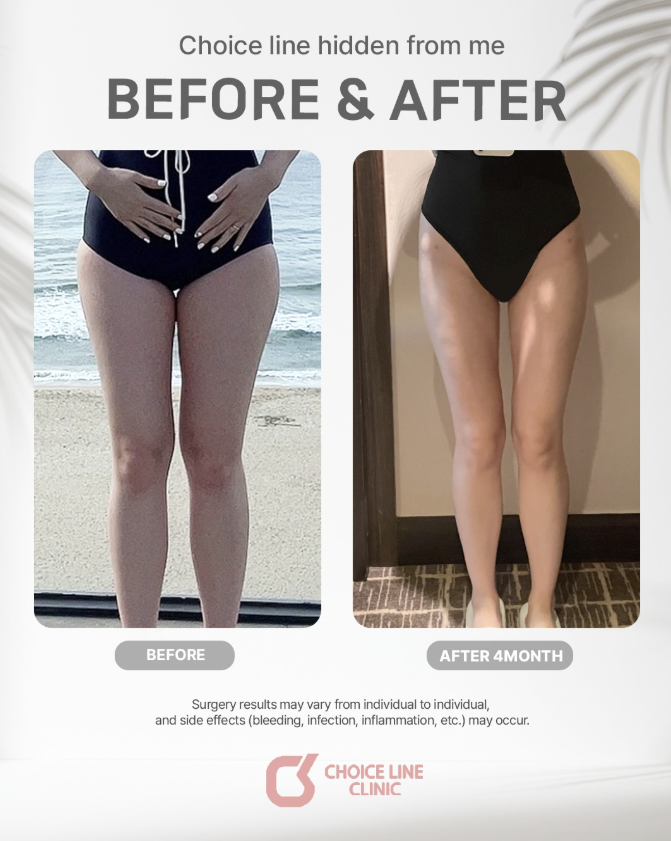
Liposuction can reduce inner-thigh fat and create more separation between the legs, but it cannot guarantee a visible thigh gap for every patient. In Korea, especially in Seoul and Gangnam, thigh contouring is usually planned around natural leg proportions rather than trying to force a specific body shape. Whether a thigh gap is possible depends on fat distribution, bone structure, muscle shape, and skin elasticity.
What Creates a Thigh Gap?
A thigh gap is influenced by several anatomical factors.
These include:
- Pelvic width
- Femur angle
- Muscle structure
- Inner-thigh fat
- Overall leg shape
Fat is only one part of the equation, so liposuction cannot change every factor.
How Can Inner Thigh Liposuction Help?
Inner thigh liposuction removes localized subcutaneous fat between the legs.
It may help:
- Reduce inner-thigh fullness
- Improve leg separation
- Create a slimmer inner-leg line
- Reduce thigh friction
- Refine lower-body proportions
Patients with enough removable fat may notice more space between the thighs after healing.
Who Is More Likely to Develop a Thigh Gap?
A visible gap may be more achievable for patients who naturally have:
- Wider pelvic structure
- Favorable leg alignment
- Localized inner-thigh fat
- Good skin elasticity
- Relatively slim overall legs
Patients with narrower bone structure may still achieve slimmer thighs without developing a full gap.
Can Liposuction Change Bone Structure?
No. Liposuction only removes fat beneath the skin.
It cannot change:
- Pelvic width
- Femur position
- Knee alignment
- Muscle shape
- Skeletal proportions
This is why two patients with similar amounts of fat may have very different results.
How Much Fat Should Be Removed?
Removing too much inner-thigh fat can sometimes create unevenness or an unnatural hollow appearance.
Good treatment planning usually focuses on:
- Smooth contour transitions
- Balanced fat reduction
- Natural leg shape
- Left-right symmetry
- Overall lower-body proportion
The goal should be slimmer, smoother legs rather than maximum fat removal.
Does Outer Thigh Liposuction Help?
Outer thigh treatment does not directly create a thigh gap, but it can improve overall leg proportions.
It may help:
- Reduce saddlebags
- Smooth hip-to-thigh transitions
- Create straighter leg lines
- Improve lower-body balance
Some patients benefit from treating both inner and outer thighs together.
How Does Skin Elasticity Affect Results?
Skin quality plays an important role after fat removal.
Good elasticity may help:
- Skin adapt to slimmer thighs
- Create smoother contours
- Reduce visible looseness
- Improve overall definition
Patients with significant skin laxity may not achieve the same degree of refinement.
What Is Recovery Like?
Swelling can temporarily make the thighs look fuller during early recovery.
Patients may experience:
- Swelling
- Bruising
- Tightness
- Tenderness
- Temporary numbness
- Mild unevenness
Compression garments are commonly recommended while the tissues heal.
When Will You Know if a Thigh Gap Has Formed?
The final result cannot be judged immediately after surgery.
Changes usually become clearer as:
- Swelling decreases
- Firmness softens
- Inner-thigh volume reduces
- Leg contours settle
Final refinement may continue for several months.
What Results Should You Expect Instead?
Rather than focusing only on a thigh gap, realistic goals may include:
- Slimmer inner thighs
- Less thigh rubbing
- Better leg separation
- Smoother contours
- More balanced proportions
These improvements may be achievable even when a complete gap is not.
Who Is a Good Candidate for Inner Thigh Liposuction?
Good candidates often have:
- Localized inner-thigh fat
- Stable body weight
- Reasonable skin elasticity
- Good overall health
- Realistic expectations
The procedure is intended for contouring rather than creating a specific body standard.
Final Thoughts
Liposuction can increase separation between the thighs by reducing localized inner-thigh fat, but it cannot guarantee a thigh gap because bone structure and muscle anatomy also play major roles. For international patients considering thigh liposuction in Korea, the best goal is usually a slimmer, smoother, and more balanced leg contour rather than a specific gap. Personalized treatment planning and realistic expectations are key to achieving natural-looking results.